Pricing strategy for salons and clinics: find your minimum price
The BoneBook team 7 min read
The best pricing strategy for an appointment business is simple: work out what one hour of your time actually costs you, add the profit you want, and treat that figure as your minimum price. Everything else (menus, offers, rises) is built on that number. Most owners who feel busy but broke have never calculated it.
How do you work out your cost per hour?
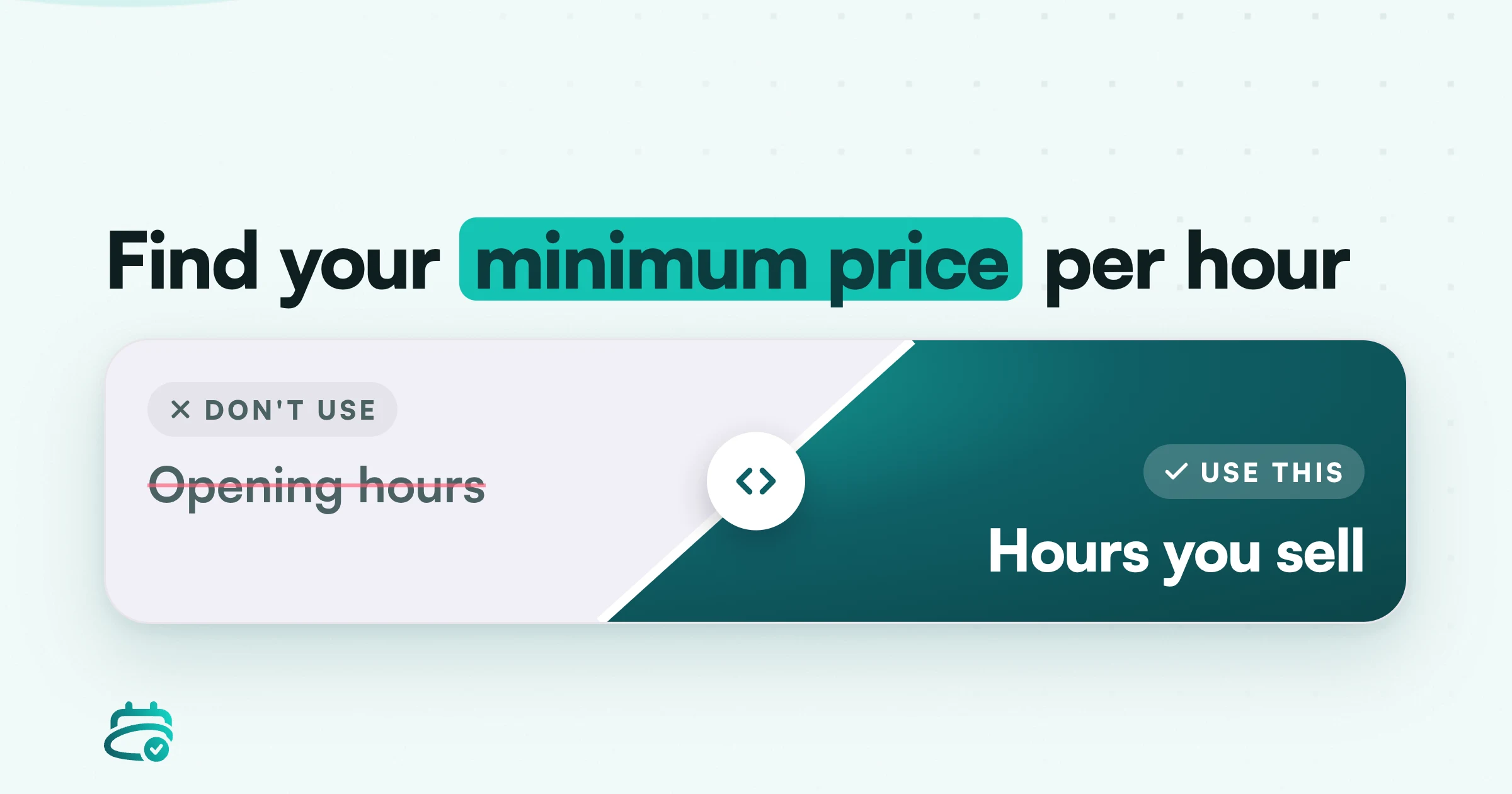
Your cost per hour is your total monthly costs, plus the pay you need, divided by the hours you really sell. Not the hours you're open. The hours a client is actually in the chair, on the couch or at the table.
Here's the method in five steps.
- List your monthly costs. Rent or chair rent, products and consumables, insurance, software, card fees, marketing, laundry, training, equipment replacement, accountant. Look at your bank statements for the last three months rather than guessing.
- Decide what you need to take home. Pick a monthly figure for yourself, then add something for tax. If you employ people, use their full cost, not just the hourly rate. For reference, the National Living Wage for those aged 21 and over in the UK is £12.71 an hour from April 2026, and employers pay more on top of that.
- Add costs and pay together. That's the amount your diary has to bring in each month just to stand still.
- Count your billable hours. Take the hours you work each week, then be honest about how many are booked. Gaps, no-shows, cleaning down, notes and admin all eat into it. A diary that's 70% full is a good one.
- Divide. Monthly total ÷ billable hours per month = cost per billable hour.
What is a worked example?
These figures are illustrative, so swap in your own. Picture a nail technician renting a room in a salon in Manchester, working alone.
| Monthly item | Amount |
|---|---|
| Room rent | £600 |
| Products and consumables | £250 |
| Insurance | £40 |
| Booking software and phone | £60 |
| Marketing | £60 |
| Equipment, training, accountant | £90 |
| Overheads | £1,100 |
| Pay needed before tax | £3,000 |
| Total the business must bring in | £4,100 |
She works four days a week with seven hours in the diary each day, so 28 hours. Realistically about 20 of those are booked. Over 46 working weeks (allowing for holidays and sickness), that's about 77 billable hours a month.
£4,100 ÷ 77 = about £53 per billable hour.
That's break-even for her own pay. It leaves nothing for a slow month, a new lamp or a day off ill.
How much margin should you add?
Add a buffer for profit and surprises. Many owners aim for 10-20%. Here we'll use 15%.
To make 15% of the price your margin, divide by 0.85, not multiply by 1.15:
£53.25 ÷ 0.85 = about £62.65, so call it £63 per hour.
That's her minimum price per hour. A 90-minute set should cost at least £94, and a 45-minute infill at least £47. If her current menu says £35 for the infill, she's working at a loss and probably doesn't know it.
What about a clinic or a salon with a team?
The method is identical, but the pay line is different.
- Physiotherapist or podiatrist: include unpaid time. A 45-minute appointment usually carries notes, emails and room turnaround, so the real slot may be an hour. Price for the hour you use, not the time on the clock when the client leaves.
- Hair salon: work out the cost per chair-hour, then price colour services by the time they actually occupy the chair, including development and the stylist's rinse and blow-dry. A half head of highlights isn't just the application time.
- Barbershop: short services are where the maths bites. A 20-minute cut at a price built for 30 minutes quietly drains the week.
What does your minimum price actually tell you?
Three things, all useful.
- Which services lose money. Compare each service's price per hour against your minimum. Long, fiddly or product-heavy treatments are the usual culprits.
- Which discounts you can afford. A "10% off for new clients" offer is fine if you're still above your minimum afterwards. If not, it's a gift.
- Whether you need to sell more hours or charge more. If your minimum is £63 and the local market tops out at £50, the answer might be fewer overheads or a fuller diary, not a bigger price.
How do you check the market without copying it?
Look at three or four businesses like yours in your area: same skill level, similar location and finish. Their price is a guide to what clients expect, not what you need. Your minimum comes first. The market tells you how far above it you can go.
Remember that being cheaper than everyone isn't a pricing strategy. It fills the diary with the clients most likely to cancel and least likely to rebook.
Do you need to charge VAT?
Only once your taxable turnover passes the threshold. In the UK, GOV.UK says you must register for VAT if your VAT taxable turnover is more than £90,000. In Ireland, Revenue's threshold for suppliers of services is €42,500 (it's €85,000 for goods). If you're approaching either, plan ahead, because your prices may need to rise or your margin will shrink. Check the current rules with your accountant before you get close.
How do you raise prices without losing clients?
Most clients accept a fair rise if it's explained and not sprung on them. Here's an order that works.
- Do the sums first. Know exactly how much you need to add. Small, regular rises (say, £2-£5 once or twice a year) go down better than one big jump after three years of silence.
- Check the break-even. Say a £50 service costs you £8 in products, so each appointment contributes £42. A £5 rise gives £47. You could lose about one client in ten (5 ÷ 47) and earn the same, while working fewer hours. In practice you'll usually lose far fewer. Run this with your own numbers.
- Give notice. Four to six weeks is common. Put it on your booking page, mention it at the end of appointments and send a short message to regulars.
- Apply to new bookings first. Newcomers see the new price from day one, so they never feel a rise. Regulars follow after the notice period.
- Keep a way in. A shorter service, a basic option or a bundle lets price-sensitive clients stay without you discounting your main menu.
- Don't apologise. "From 1 January my cut and finish will be £42" is enough. Skip the long explanation.
What should the message say?
Something like: "Hi Sam, just a heads-up that from 1 January my prices are going up slightly: a cut and finish will be £42. Your next appointment is booked at the current price if you book before then." Short, kind and clear.
Can deposits, packages and offers support your pricing?
Yes, and they protect your margin more than discounts do.
- Deposits cut no-shows, which are the biggest hidden cost to your hourly rate. If you take deposits and online payments, a missed slot is no longer a pure loss.
- Session packages reward commitment without cutting your hourly rate to the floor. Work out the per-session price against your minimum before you set it. Packages and gift cards work well for physiotherapy blocks, massage courses and nail or lash maintenance plans.
- Off-peak offers make sense when the slot would otherwise sit empty, as long as the price still covers your direct costs. Never discount a slot you'd fill anyway.
How do you know if your prices are working?
Look at your own numbers every quarter: how full the diary is, which services sell most, how many clients are new, and what a typical week brings in. If you use a booking system with reports, such as the statistics in BoneBook, you can compare 30, 90 or 365 days against the previous period. The revenue figure there is estimated from your service prices, so it's a guide, not your accounts. If you don't, a notebook or spreadsheet does the job.
Watch for these signs after a rise:
- Cancellations rising for more than a month
- New enquiries dropping with price as the stated reason
- Regulars stretching gaps between visits
If you see none of them, you probably priced too low before.
What to do this week
- Collect three months of costs from your bank statements and write down your target pay.
- Count real billable hours from your last four weeks' diary, not your opening hours.
- Calculate cost per hour and your minimum price using the method above, with a 10-20% margin.
- Check each service against that minimum. Mark the ones below it.
- Pick one or two services to fix first, ideally the ones you do most often.
- Set a review date in your calendar, once or twice a year, and stick to it.
If you're not sure your figures are right, especially around VAT, tax or employing staff, have a quick chat with your accountant. An hour with them is cheaper than a year of undercharging.
Frequently asked questions
How do I calculate my hourly rate as a self-employed beauty therapist or hairdresser?+
Add up your monthly costs and the pay you need, then divide by the hours you genuinely have clients booked, not your opening hours. Add a profit margin of around 10-20% by dividing the result by 0.85 (for 15%). That gives you a minimum price per hour.
How often should I put my prices up?+
Once or twice a year is common, in small steps. A modest rise with a few weeks' notice is usually easier for clients than a big jump every few years. Review your costs at the same time so the rise is based on real numbers.
How much notice should I give clients before a price rise?+
Four to six weeks is a sensible guide. Put it on your booking page, mention it in person and message regular clients directly. Apply the new price to new bookings first.
Should I match my competitors' prices?+
Use them as a guide to what clients expect, not as a target. Your minimum price comes from your own costs. If a competitor charges less than you can afford to, matching them just means working harder for less.
When do I have to charge VAT?+
In the UK you must register once your VAT taxable turnover is more than £90,000, according to GOV.UK. In Ireland the registration threshold for suppliers of services is €42,500, according to Revenue. Check with your accountant before you get close, as your pricing may need to adjust.