Loyalty Schemes for Salons and Clinics: What Pays Off
The BoneBook team 9 min read
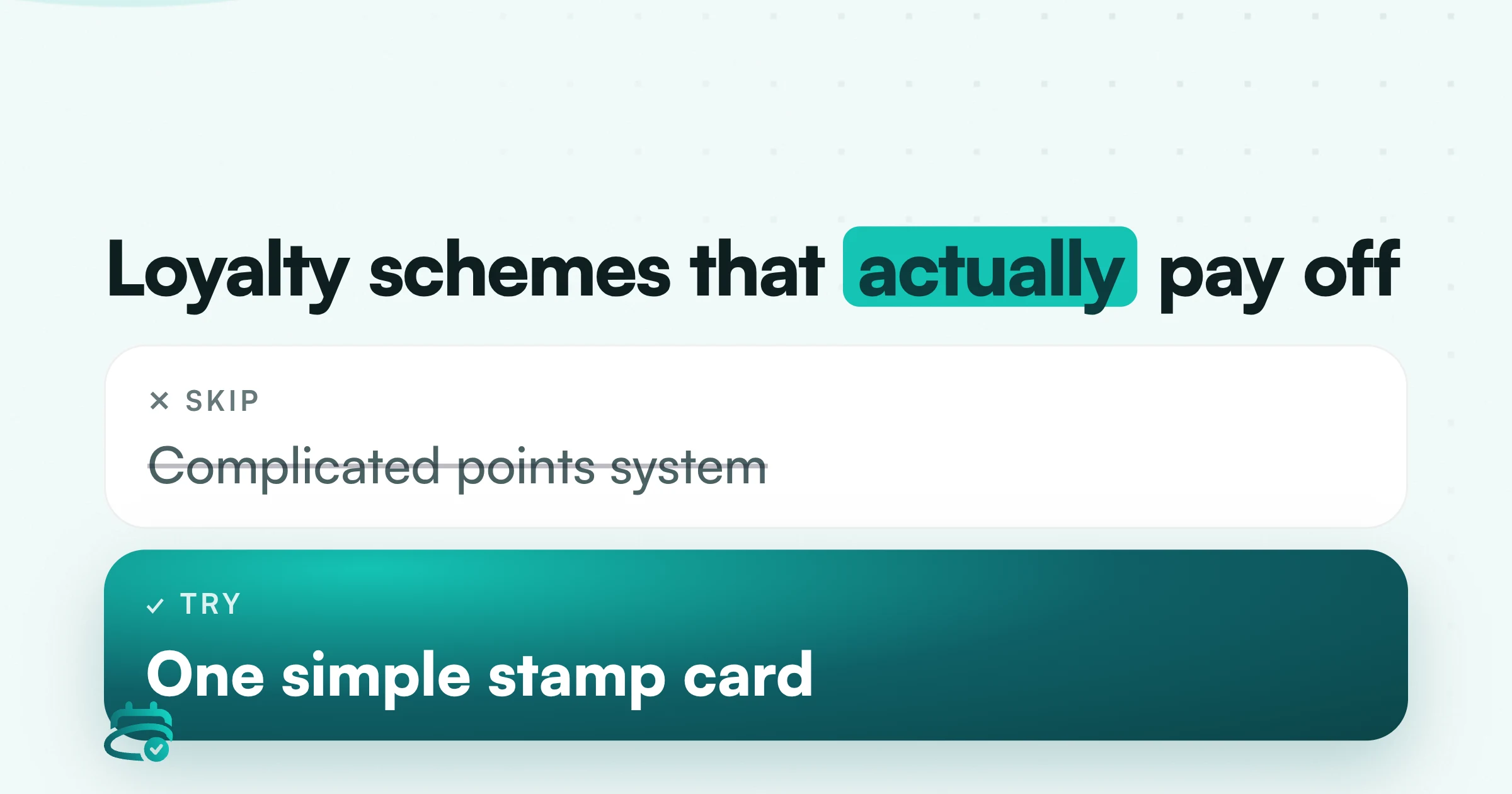
The loyalty schemes that work best for appointment businesses are the simple ones: a stamp card, a prepaid package or a nudge to rebook. They pay off when the reward costs you less than the extra visits it brings in. Before you launch anything, work out what a returning client is worth, what the reward really costs you, and how you'll know after three months whether it's doing its job.
Do loyalty schemes actually work for salons, barbershops and clinics?
Yes, but only when they change what clients do. A scheme that rewards people for visits they'd have made anyway just hands out discounts.
In an appointment business, the thing you want is usually one of three behaviours:
- Clients rebook before they leave (or soon after), rather than drifting away.
- Clients come at the right interval, such as a barber's four-weekly cut or a physio's follow-up.
- Clients commit in advance, by buying a course of sessions.
If your scheme doesn't push one of those, rethink it. Your diary is full of fixed capacity, so the real prize is filling quiet slots with people who already trust you, rather than chasing new ones.
What types of loyalty scheme can you run?
There are four common types. Most small businesses only need one.
| Type | How it works | Best for | Watch out for |
|---|---|---|---|
| Stamps | One stamp per completed visit; a reward after a set number | Barbershops, nail and lash studios, dog groomers, regular treatments | Reward too far away, so clients lose interest |
| Points | Points per £ spent, swapped for rewards | Businesses with lots of retail or varied spend | Complicated to explain and to track |
| Discount per visit | A set % off after a number of visits, or a "regular" price | Very frequent services | Quietly eats margin on every visit |
| Recurring bookings and packages | Client books a course or standing slot, often prepaid, at a better price per session | Physiotherapy, massage, laser, personal training | Needs clear expiry and refund rules |
Stamp cards
A stamp card is the easiest to understand: "Every tenth cut is on us." Clients get it in two seconds, and you can run it on paper or digitally. It suits services people repeat on a regular cycle, which is why it's so common in barbershops and nail studios.
Points
Points make sense if spend varies a lot, say a hair salon where one client has a £35 cut and another has a £180 colour. The catch is that you have to explain the rate, the value of a point and the expiry. For most small teams, that's more admin than it's worth.
Discounts per visit
"Ten per cent off for regulars" is quick to set up, but it costs you on every single visit, including from people who'd have come anyway. If you do it, make it conditional on something, such as booking the next appointment before leaving.
Recurring bookings and packages
For clinics, this is often the strongest option. A block of sessions bought up front gives you cash in advance and gives the client a reason to finish the course. It's less a "reward" and more a better deal for committing. If you want to sell these online, session packages and gift cards can handle the code and the sessions remaining, so you're not counting on a notebook.
How do you work out whether a loyalty scheme is worth it?
Use your own numbers and keep the sums to a few lines. Here is an illustration with made-up figures, so swap in yours.
Say a barbershop charges £22 for a cut, with a stamp card where the tenth cut is free.
- Value of the cycle: ten visits, with the last one free, means the client pays for nine: £198.
- Real discount: one free cut out of ten is a discount of about 10% on the cycle.
- Real cost of the reward: this isn't the full £22. It's the product and any costs you'd pay anyway, plus the fact you lose the income from that slot if it could have been sold to someone else.
- What you gain: if the card makes the client come every four weeks rather than every six, they visit more often in the year. That's the extra revenue to compare with the reward cost.
The key question is whether the free slot would otherwise have been empty. If your Tuesday morning is quiet, a free cut in that slot costs you almost nothing. If it's a Saturday that would have sold at full price, it costs a lot. You can steer this by limiting rewards to quieter times.
A quick test: reward cost ÷ extra visits it creates. If a scheme gives away £22 and adds one more paid visit a year per client, it's roughly break-even before you count the clients who stay longer. If it adds nothing, you've just cut your prices.
Don't forget the ordinary running costs too: printing cards, staff time explaining it, and anything you pay for software.
What mistakes do people make with loyalty schemes?
These come up again and again in appointment businesses:
- Rewards that are too far away. If it takes 20 visits to get anything, most clients never see it. Aim for a reward a client can reach within a few months.
- Rules that need a paragraph to explain. If the front desk can't say it in one sentence, clients won't remember it.
- Rewarding the wrong thing. Points for spending on retail won't help if your problem is clients disappearing after one visit.
- No expiry or no limits. Open-ended rewards can pile up as a liability. Decide when stamps and packages run out and say so upfront.
- Discounting your busiest slots. Restrict free or reduced appointments to quieter times.
- Forgetting the team. If staff don't offer the card or stamp it, the scheme dies in a fortnight. Tell the team why it exists and make it part of the checkout routine.
- Never checking the results. Many schemes run for years without anyone asking if they're helping.
What does the law say about collecting contact details for a scheme?
A loyalty scheme means collecting names, phone numbers and emails, and you'll probably want to message people about rewards or offers. A few basics apply in both the UK and Ireland. This isn't legal advice, so check the official guidance below.
In the UK, the Privacy and Electronic Communications Regulations (PECR) cover marketing by email, text and similar messages. In general you need consent, or you must meet the "soft opt-in" conditions for your own products and services: the details were collected during a sale or negotiation, the client was offered a clear chance to opt out at the time, and every message includes an easy way to opt out. The Data (Use and Access) Act 2025 changed the PECR enforcement and penalty regime, with the relevant provisions taking effect on 5 February 2026, so it's worth getting this right rather than assuming nobody checks. The ICO's direct marketing guidance is the place to confirm the current rules.
In Ireland, the ePrivacy Regulations (S.I. 336 of 2011) are enforced by the Data Protection Commission. For existing customers, the DPC's guidance on Regulation 13(11) says the product or service you're marketing must be your own and similar to what the customer bought, the customer must have been given an easy, free chance to object when you collected their details, every message must include a way to object, and the sale must have been within the previous twelve months. The DPC's FAQ on consent for electronic direct marketing is a good starting point.
Practical takeaways: ask clearly at sign-up whether they'd like offers by message, keep a record of who said yes, put an opt-out in every message, and stop messaging anyone who opts out. Sending a client their own reward balance or a reminder of an appointment is different from promotional marketing, but if in doubt, ask for consent.
How do you launch a loyalty scheme without overcomplicating it?
- Pick the one behaviour you want. Faster rebooking, more regular visits, or course completion.
- Choose the simplest scheme that fits. A stamp card for repeat services, a package for treatment courses.
- Set the reward from your numbers. Use the sums above. Prefer rewards that cost you little, such as a free add-on treatment, a quiet-slot appointment or a product sample, over cutting your headline price.
- Write the rules in one sentence. For example, "Ten stamps, one free cut, valid for 12 months." Put the details (expiry, quiet-hours restriction) on the card or the booking page.
- Decide how clients join. Automatic after their first visit is the least effort for everyone.
- Brief the team. Agree who offers it, who stamps it and what to say.
- Tell your existing clients. A short message to people who've consented, a sign at the till and a mention on Instagram or your Google profile are enough.
- Set a review date. Put 90 days in your calendar now.
If you use online booking software, a digital card saves you chasing paper cards and lost stamps. For example, BoneBook's loyalty and reviews feature (Pro plan) adds a stamp for every completed visit, lets you choose between 3 and 30 stamps for the reward, and gives clients a link to see their card without an app or sign-up. You redeem the reward from the client's record. Whatever tool you use, the design principles above are the same.
How do you measure whether it's working?
Keep to a handful of numbers, and compare them with the period before the scheme started:
- Visits per client per year (or per quarter) among scheme members.
- Rebooking rate: the share of clients who have a next appointment booked.
- Lapsed clients: how many haven't returned in your usual cycle (say, 8 weeks for a barber).
- Rewards given vs. visits added: did members come more often, or did you just give away rewards?
- Quiet-slot occupancy: whether rewards are filling the gaps you hoped.
Your booking system's reporting should give you most of these. Statistics in BoneBook's Pro plan, for instance, compare 30, 90 or 365-day periods with the previous one, covering appointments, new clients and cancellations. A notebook and a spreadsheet work too if you're small.
After 90 days, ask three questions. Are members visiting more often than before? Is the reward costing less than the extra visits bring in? Is the team actually using it? If the answer to any is no, tweak the reward distance, the quiet-hours rule or how you promote it. If a scheme isn't helping, stopping it is a perfectly good result, as long as you tell clients in good time.
What should you do this week?
- Write down your average visit value and how often a typical regular client comes.
- Pick one scheme type from the table and sketch the rule in one sentence.
- Work out the real cost of the reward, using quiet slots wherever you can.
- Check how you ask for marketing consent when someone books or pays, and fix the wording if it's vague.
- Brief your team, and put a review date in the diary for 90 days' time.
- If clients frequently don't rebook, a reminder to come back to people who haven't visited for a while can do as much as any reward.
Start small, watch the numbers, and keep the scheme only if it earns its place.
Frequently asked questions
What is the best type of loyalty scheme for a small salon or barbershop?+
A stamp card is usually the best starting point because clients understand it immediately and it rewards regular visits. Keep the reward within reach, such as after 6 to 10 visits, and limit it to quieter times if you can.
How much should a loyalty reward cost me?+
Work out the real cost to you (product, and the income you lose if the slot could have been sold), not the price list. Compare that with the extra visits the scheme creates. If the reward is a quiet-slot appointment, the true cost is often small.
Do I need consent to send loyalty offers by text or email in the UK and Ireland?+
Generally yes, or you must meet the existing-customer (soft opt-in) conditions, which include an easy opt-out when you collect the details and in every message. Irish rules also say the sale must be within the last twelve months. Check the ICO and Data Protection Commission guidance, and keep a record of consent.
Are session packages better than a points scheme for clinics?+
Often, yes. Physiotherapy, massage, laser and similar services work in courses, so a prepaid package gives clients a reason to finish the course and gives you the money upfront. Set a clear expiry and a refund rule so there are no arguments later.
How long should I run a loyalty scheme before judging it?+
Give it about 90 days, then compare visits per client, rebooking and lapsed clients with the period before. If members aren't coming more often, change the reward or the rules, or drop it.
Sources
- Data Protection Commission (Ireland): E-receipts and Regulation 13(11) of S.I. 336/2011
- Data Protection Commission (Ireland): FAQ on consent for electronic direct marketing
- legislation.gov.uk: Data (Use and Access) Act 2025, section 115 (PECR enforcement)
- ICO: Direct marketing and privacy and electronic communications